September 16, 2026
Knoxville, Tennessee - September 16, 2026 -
Cover Pro Roofing has extended flat roofing installation coverage across the full extent of its East Tennessee service area, giving commercial and residential property owners in Knoxville, Tennessee and the surrounding communities access to the same low-slope specification the contractor has worked to since 2011.
Cover Pro Roofing provides flat roofing installation in Knoxville, working with thermoplastic polyolefin membranes, known in the trade as TPO, along with EPDM rubber and modified bitumen systems. The contractor provides comprehensive roofing services across low-slope and pitched systems, including full roofing systems, repairs, and ongoing maintenance, and has done so throughout East Tennessee for more than fifteen years. Coverage now reaches communities including Maryville, Oak Ridge, Sevierville, and Lenoir City, all within roughly an hour of Knoxville. Material selection is made against the individual building, accounting for roof size, deck condition, insulation requirements, and how the finished surface will be used.
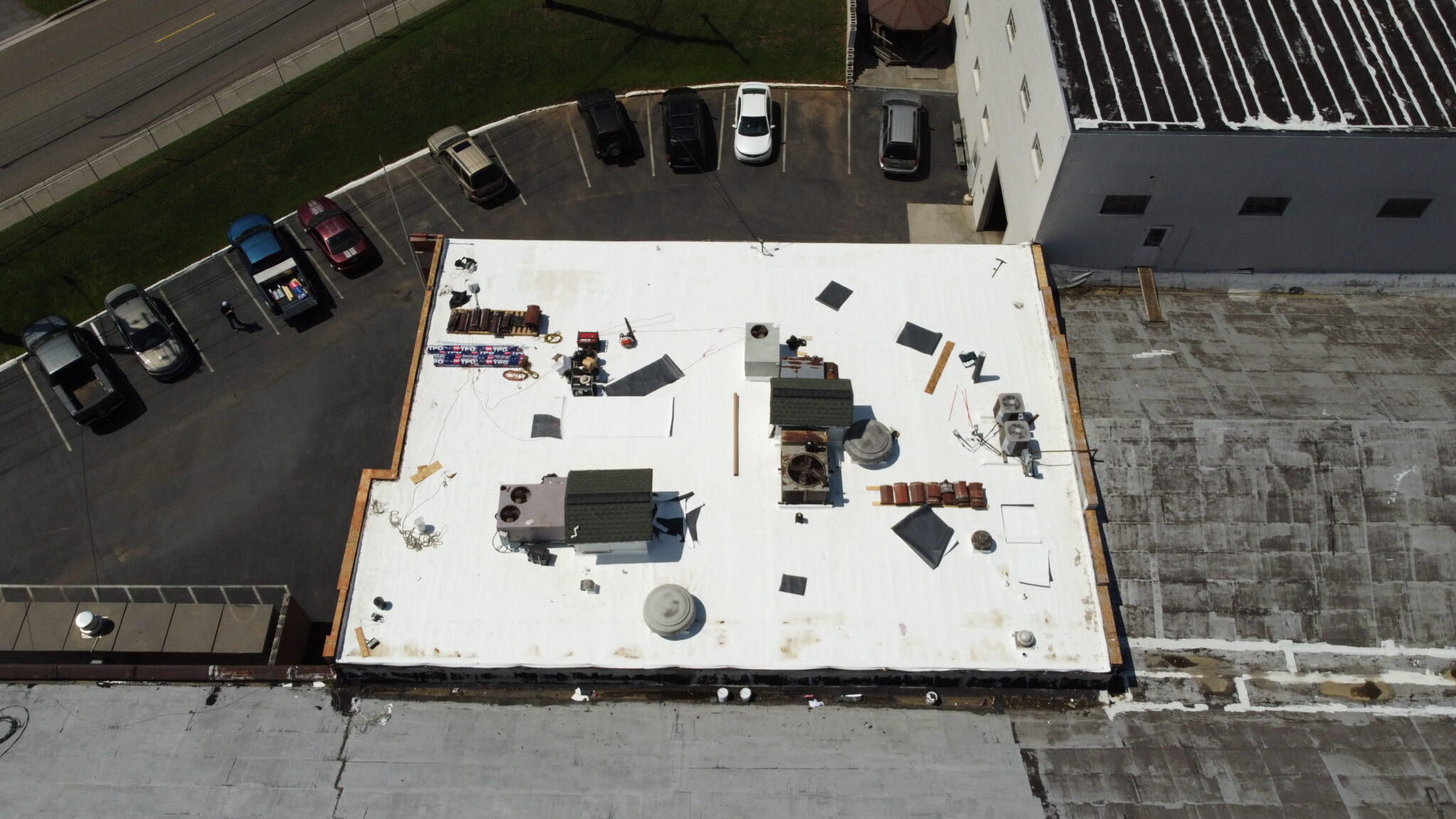
Commercial buildings account for the majority of the flat roof work the contractor takes on. Warehouses, retail units, light industrial premises, and office buildings across the Knoxville market are commonly built with flat or near flat roofs, and they carry the bulk of the low-slope roof area locally. Residential flat roofs come through less often but regularly, most frequently on additions, garages, porch structures, and contemporary designs where a flat profile forms part of the architecture. Those projects usually involve a small flat section adjoining a pitched roof, a transition detail that has to be handled correctly to avoid a persistent leak at the junction.
Flat and low-slope roofs behave differently from pitched roofs, and the difference sits mostly in how water leaves the surface. A shingle roof sheds water by gradient, while a flat roof relies on a continuous waterproof membrane, deliberate slope built into the substrate, and drainage points positioned so that standing water does not collect. Ponding water remains a common cause of premature failure in low-slope systems, because prolonged saturation degrades seams and finds any weakness in the membrane. Tapered insulation is used where the existing deck provides insufficient fall, directing water toward drains rather than allowing it to settle in low areas of the field.
Installation quality at the seams and around penetrations such as vents, curbs, and drains carries more weight on a flat roof than on almost any other roof type. The sequence the crews work to begins with an inspection of the existing structure and deck, followed by surface preparation, installation of insulation to the specified thickness, application of the membrane, and final sealing of seams, edges, and penetrations. Project duration is set by roof size, access, weather, and the condition of the deck beneath an older covering, and is confirmed with the property owner at estimate stage rather than assumed.
"Most of the flat roof work we take on is commercial, and the buildings that hold up longest are the ones where the drainage was got right at the start," said Mike Martin, Owner of Cover Pro Roofing. "Residential flat roofs come through less often, usually an addition or a garage, and they get the same detailing either way. Extending coverage across the whole service area means the specification is the same wherever the building sits."
Cover Pro Roofing is licensed and insured and holds four manufacturer certifications: GAF GoldElite, CertainTeed ShingleMaster, Best Buy Metals, and Soprema. Manufacturer certification carries a direct consequence for the property owner on low-slope work, because warranty coverage on a membrane system is generally available only where the installing contractor holds the relevant certification and has installed to that manufacturer's published specification. Materials and process detail are set out on the flat roofing page.
Cover Pro Roofing has worked across East Tennessee since 2011 and carries more than fifteen years of roofing experience. The contractor is BBB accredited with an A+ rating, and project managers carry out on-site quality checks during installation. Complimentary roof inspections are offered, and the contractor corresponds directly with insurers on behalf of property owners where storm damage forms part of a claim. Estimates are issued with a line-item breakdown of the materials and scope of work involved.
Low-slope roofing is a category where installation standards, drainage design, and membrane selection determine service life more than material cost alone. Extending installation coverage gives commercial and residential property owners across the wider service area access to the same specification work regardless of which community a project sits in. Further information about the service and the areas covered is available on the contractor's website, and project updates are posted on its Facebook page.
###
For more information about Cover Pro Roofing, contact the company here:
Cover Pro Roofing
Mike Martin
(865) 999-7663
mike@coverproroofing.com

Cover Pro Roofing is a trusted family-owned roofing company in Knoxville, TN. It provides expert roof installation, replacement, repairs, and inspections. Fully licensed and insured, the team delivers lasting quality and dependable protection.