September 18, 2026
Fort Collins, CO - September 18, 2026 -
Carriage Shoppe has published new consumer guidance explaining how front-end collision damage is evaluated during repair planning and why damage at the front of a vehicle can involve more than the components visible immediately after an accident.
The September resource focuses specifically on the front-end evaluation process, including exterior damage documentation, component relationships, access to covered areas, and vehicle-specific repair information. The guidance is intended to help consumers understand how damage involving the bumper, grille, headlights, hood, fenders, and nearby components can be evaluated as part of a coordinated repair plan.
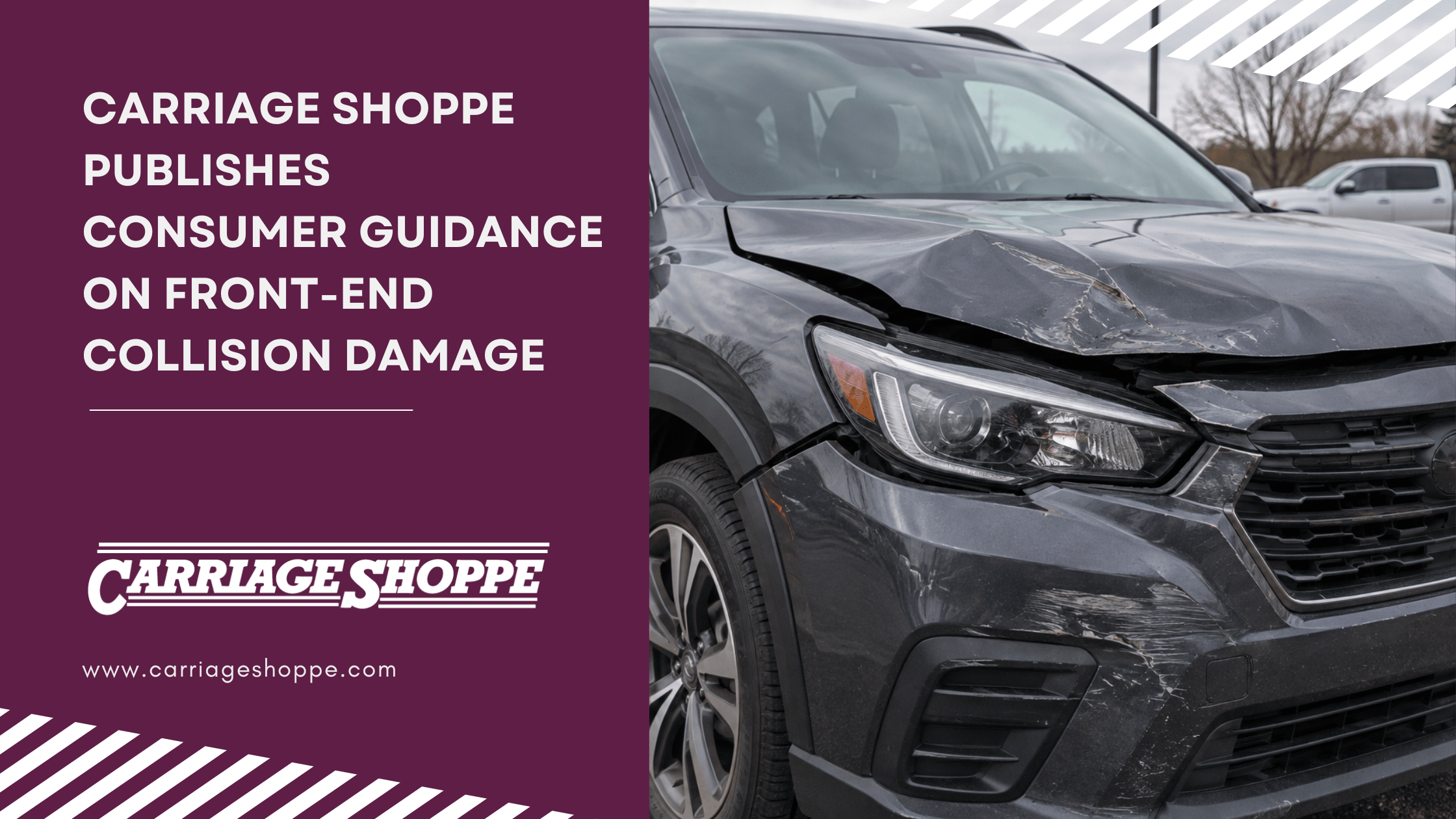
Front-end collisions can produce different damage patterns depending on the location, direction, and severity of the impact. An initial inspection may identify visible conditions such as a cracked bumper cover, damaged grille, displaced headlight, bent hood edge, dented fender, or changes in panel alignment.
These visible conditions provide a starting point for evaluation, but the September guidance explains that the front of a modern vehicle consists of multiple components positioned in close proximity to one another. An impact involving one exterior part can therefore lead technicians to evaluate adjacent areas when appropriate to the documented collision.
Additional information about evaluating and restoring collision-damaged vehicles is available through Yoder Collision Network's collision repair information.
The bumper area provides one example of how front-end repair planning can progress. A bumper cover forms the visible exterior surface, while other components may be positioned behind or around it. Depending on the vehicle, these areas can include mounting hardware, reinforcement components, energy-absorbing materials, wiring, sensors, and adjoining body structures.
Damage to the exterior bumper cover does not automatically establish that components behind it are also damaged. When appropriate repair planning provides access to those areas, technicians can document their actual condition and determine whether additional operations are relevant.
Headlights and their mounting areas can also be part of a front-end evaluation. A lamp assembly may remain illuminated after an impact while still requiring evaluation for physical damage, displaced mounting points, or changes in its position relative to nearby panels.
The September guidance distinguishes the operation of a component from its physical condition. A functioning light does not by itself establish that every mounting point or surrounding component remains unaffected. Evaluation is based on the documented condition of the individual vehicle.
Hoods and fenders introduce additional considerations because their fit is connected to adjoining components and attachment areas. Changes in the spacing or alignment between a hood, fender, bumper, grille, and lamp can provide information about where technicians may need to evaluate the vehicle more closely.
Panel position alone does not determine the extent of collision damage. Instead, technicians can document the affected areas and use appropriate measurements, access, and repair information when those steps are relevant.
Carriage Shoppe's Fort Collins operation identifies structural repair and measuring capabilities among its collision repair services. Modern vehicle structures are engineered with specific dimensions, attachment points, and energy-management areas, making measurement useful when the documented impact indicates that structural evaluation is appropriate.
The September resource also addresses the role of materials in front-end collision repair.
Modern front-end assemblies can contain combinations of steel, aluminum, plastics, composites, adhesives, mechanical fasteners, and other materials. Different components on the same vehicle may therefore require different repair considerations.
A dented metal fender, cracked plastic bumper cover, damaged mounting bracket, and deformed structural component cannot necessarily be evaluated using the same repair criteria. The material, location of the damage, attachment method, and condition of each component can contribute to the repair decision.
Additional information about body panel and exterior component restoration is available through Yoder Collision Network's auto body repair information.
Vehicle technology can also be positioned within front-end components. Depending on the model and installed equipment, cameras, radar units, parking sensors, wiring, and other electronic systems may be located in or near bumpers, grilles, windshields, and related areas.
Their presence does not automatically mean that a particular diagnostic or calibration procedure will be required after every front-end collision. Vehicle identification and manufacturer-specific repair information can help determine which procedures apply to the components and repair operations involved.
This makes technical research another part of front-end repair planning. Manufacturer information may address component removal and installation, repair limitations, joining methods, measurements, inspections, corrosion protection, electronic procedures, and other requirements for the individual vehicle.
Yoder Collision Network provides information about manufacturer-specific repair programs through its OEM certification resource.
The September guidance brings these considerations together by presenting front-end collision evaluation as a component-by-component process rather than treating the entire front of the vehicle as a single damaged area.
Visible exterior conditions are documented first. Adjacent and previously covered areas can then be evaluated when appropriate access is available. Structural measurements or technical research can be incorporated when relevant to the documented impact and repair operations.
This approach also explains why two vehicles with apparently similar front-end damage can receive different repair plans. Differences in vehicle construction, materials, affected components, installed technology, and manufacturer procedures can influence the operations applicable to each repair.
The new September resource adds a front-end-specific explanation to Carriage Shoppe's existing consumer collision repair information. Its focus is not on predicting the extent of damage from the appearance of an accident but on explaining how technicians develop a more complete picture of the affected components during repair planning.
The central takeaway is that front-end collision repair begins with visible damage but is developed around the documented condition of the individual vehicle. Exterior components, adjoining areas, structural elements, materials, and installed technology can each provide relevant information when determining the appropriate repair scope.
Carriage Shoppe is part of Yoder Collision Network and provides collision and auto body repair services at 327 S Link Ln, Fort Collins, CO 80524. The Fort Collins facility provides structural repair, refinishing, vehicle measuring, diagnostic, and other collision-related repair services.
###
For more information about Carriage Shoppe, contact the company here:
Carriage Shoppe
Micah
970 482 3597
officestaff@carriageshoppe.com
327 S Link Ln, Fort Collins, CO 80524

Carriage Shoppe in Fort Collins provides trusted collision repair, dent repair, structural restoration, and expert auto painting. As part of the Yoder Collision Network, we deliver factory-quality repairs backed by a lifetime warranty.
Micah
327 S Link Ln, Fort Collins, CO 80524
970 482 3597
officestaff@carriageshoppe.com
Visit Website