October 14, 2026
Fort Collins, CO - October 14, 2026 -
Carriage Shoppe has published new consumer guidance explaining why collision repair may require removing interior trim and how gaining access to covered areas can support a more complete repair plan.
The October resource focuses on the role interior components can play when collision damage affects doors, pillars, rocker areas, quarter panels, roof-adjacent structures, or other parts of the vehicle body. It explains that trim removal can provide access to attachment points, wiring, interior-facing surfaces, and adjoining components that may not be visible during an initial exterior evaluation.
The new guidance adds an access-focused explanation to Yoder Collision Network's existing collision repair information. Rather than suggesting that interior trim is damaged whenever it is removed, the resource explains how removal can be a necessary step for evaluating or performing certain exterior and structural repairs.
Interior trim can include door panels, pillar covers, carpeting, interior quarter trim, headliner sections, and other finished components covering areas of the vehicle body. These parts contribute to the appearance and function of the passenger compartment, but they can also cover locations technicians may need to reach during collision repair.
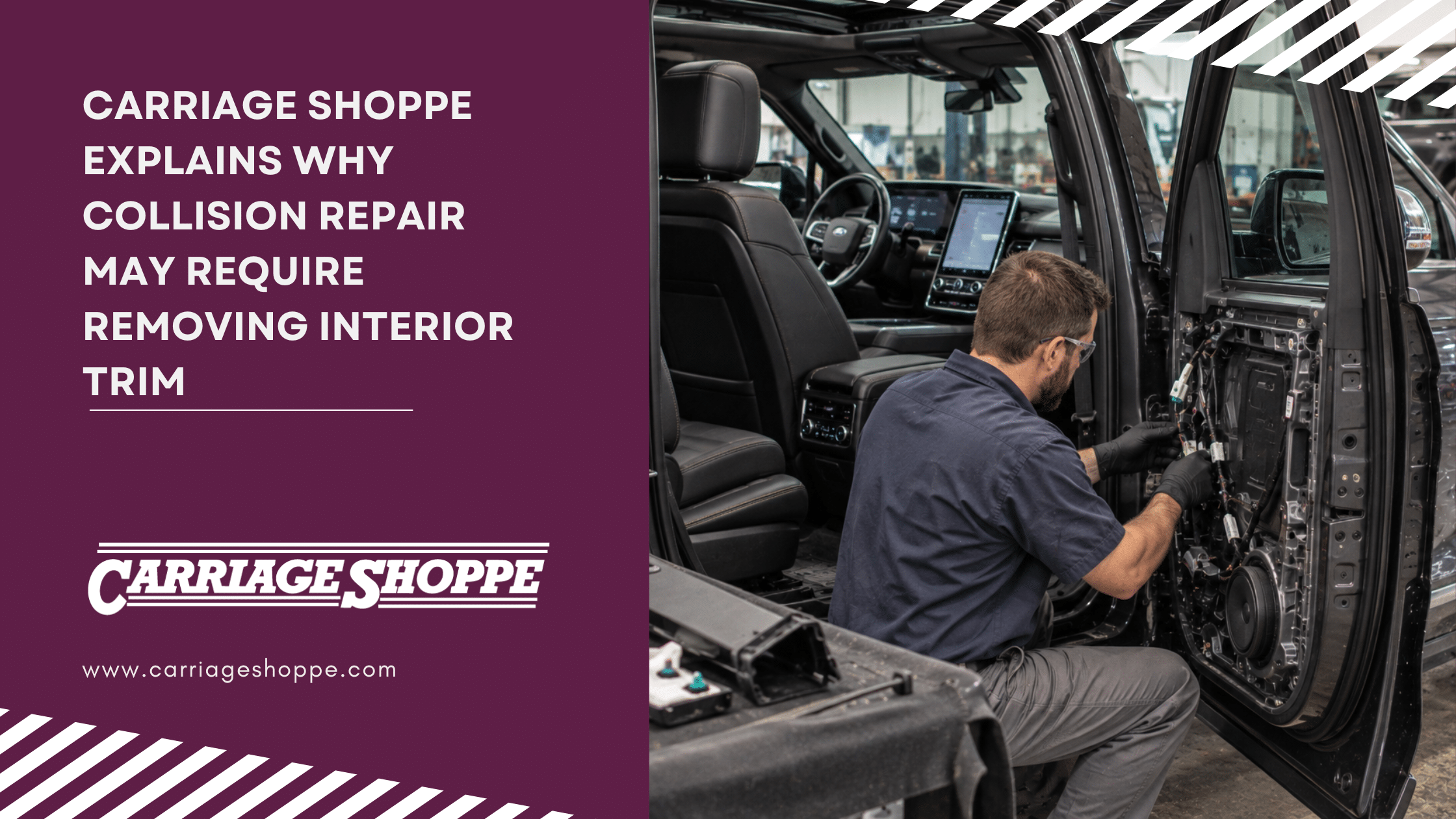
A damaged door provides one example. The exterior may show a dent, crease, or deformation, while the interior door panel covers portions of the inner structure, wiring, fasteners, window mechanisms, and other equipment.
When access to those areas is relevant to the repair, removing the interior door trim can allow technicians to inspect the component more closely or reach attachment points required for repair or replacement. The trim itself does not need to have collision damage for its temporary removal to become part of the repair process.
Similar considerations can apply when a collision affects a vehicle's pillars or rocker areas. Interior covers and nearby trim can limit access to portions of these structures from inside the passenger compartment. Depending on the damaged component and repair operation, appropriate removal can expose areas needed for inspection, measurement, component removal, or joining procedures.
The October guidance emphasizes that trim removal should not be interpreted as evidence that damage has spread throughout the vehicle interior. Its purpose can simply be to create appropriate access to the specific area involved in the documented collision repair.
Access can also become important when technicians need to evaluate attachment points or the interior-facing side of a damaged component. Exterior appearance provides useful information, but some repair decisions depend on conditions that cannot be fully observed while adjoining parts remain installed.
This is particularly relevant when exterior panels are attached to underlying structures through welds, adhesives, fasteners, or other joining methods. The repair procedure may require technicians to reach specific locations from inside or behind the affected area.
Additional information about exterior panel and body restoration is available through Yoder Collision Network's auto body repair information.
Modern vehicles can also contain wiring and electronic components behind interior trim. Depending on the vehicle, doors, pillars, roof areas, and other interior-adjacent locations may contain wiring harnesses, connectors, electronic modules, speakers, sensors, or related equipment.
Their presence can influence how access is created and how components are handled during repair. It does not automatically mean those systems have been damaged or require replacement. Their documented condition and the operations being performed determine their role in the repair plan.
Manufacturer repair information can provide additional direction when interior components must be removed. Vehicle-specific procedures may address trim removal and installation, fasteners, component handling, structural access, joining methods, corrosion protection, or precautions associated with nearby equipment.
Yoder Collision Network provides additional information about manufacturer-specific repair considerations through its OEM certification information.
The October resource also explains the relationship between disassembly and repair planning. During an initial inspection, technicians document conditions that are reasonably visible and accessible. When the repair process requires certain components to be removed, previously covered areas can become available for closer evaluation.
Any additional collision-related conditions identified at that stage can then be documented. If no additional damage is found, the removal may still have been necessary to provide access for the planned repair.
This distinction is important because removal and replacement are separate repair operations. A repair plan may call for removing and later reinstalling an undamaged interior component simply because it obstructs access to the area being repaired.
The same principle applies to protective handling. Interior components near body or structural repair areas may need to be removed or repositioned so technicians can perform applicable operations without unnecessarily exposing those components to the work area.
The new October guidance provides consumers with context when interior trim operations appear on collision repair documentation even though the accident primarily affected the vehicle's exterior. Those operations can reflect access requirements rather than separate interior collision damage.
It also illustrates why collision repair plans can contain operations involving components that do not appear damaged in photographs of the vehicle. Repair planning considers not only which parts were affected by the collision but also which components must be accessed, removed, or repositioned to perform the documented repair procedures.
By publishing the October guidance, Carriage Shoppe is providing a focused explanation of a less visible part of collision repair. The resource connects interior trim removal with access to damaged body areas, attachment points, adjoining structures, and vehicle-specific repair procedures without implying that removal is necessary for every repair.
The central takeaway is that temporary removal of interior trim can be part of properly accessing and repairing collision-affected areas. Its inclusion in a repair plan does not by itself indicate interior damage, and the specific operations depend on the vehicle, affected components, and repair procedures involved.
Carriage Shoppe is part of Yoder Collision Network and provides collision and auto body repair services at 327 S Link Ln, Fort Collins, CO 80524. The facility provides body and structural repair, refinishing, vehicle measuring, diagnostic procedures, and related collision repair services.
###
For more information about Carriage Shoppe, contact the company here:
Carriage Shoppe
Micah
970 482 3597
officestaff@carriageshoppe.com
327 S Link Ln, Fort Collins, CO 80524

Carriage Shoppe in Fort Collins provides trusted collision repair, dent repair, structural restoration, and expert auto painting. As part of the Yoder Collision Network, we deliver factory-quality repairs backed by a lifetime warranty.
Micah
327 S Link Ln, Fort Collins, CO 80524
970 482 3597
officestaff@carriageshoppe.com
Visit Website