October 02, 2026
Ardmore, PA - October 02, 2026 -
Evolve Collision Centers has updated its consumer guidance explaining how original equipment manufacturer repair procedures can influence collision repair planning. The September publication focuses on how vehicle-specific information can address component repairability, replacement requirements, joining methods, measurements, corrosion protection, and procedures associated with modern vehicle technology.
The updated resource was developed to help vehicle owners understand why collision repair cannot always be approached through one standard method. Even when two vehicles sustain similar-looking exterior damage, differences in construction, materials, components, installed technology, and manufacturer requirements can result in different repair procedures.
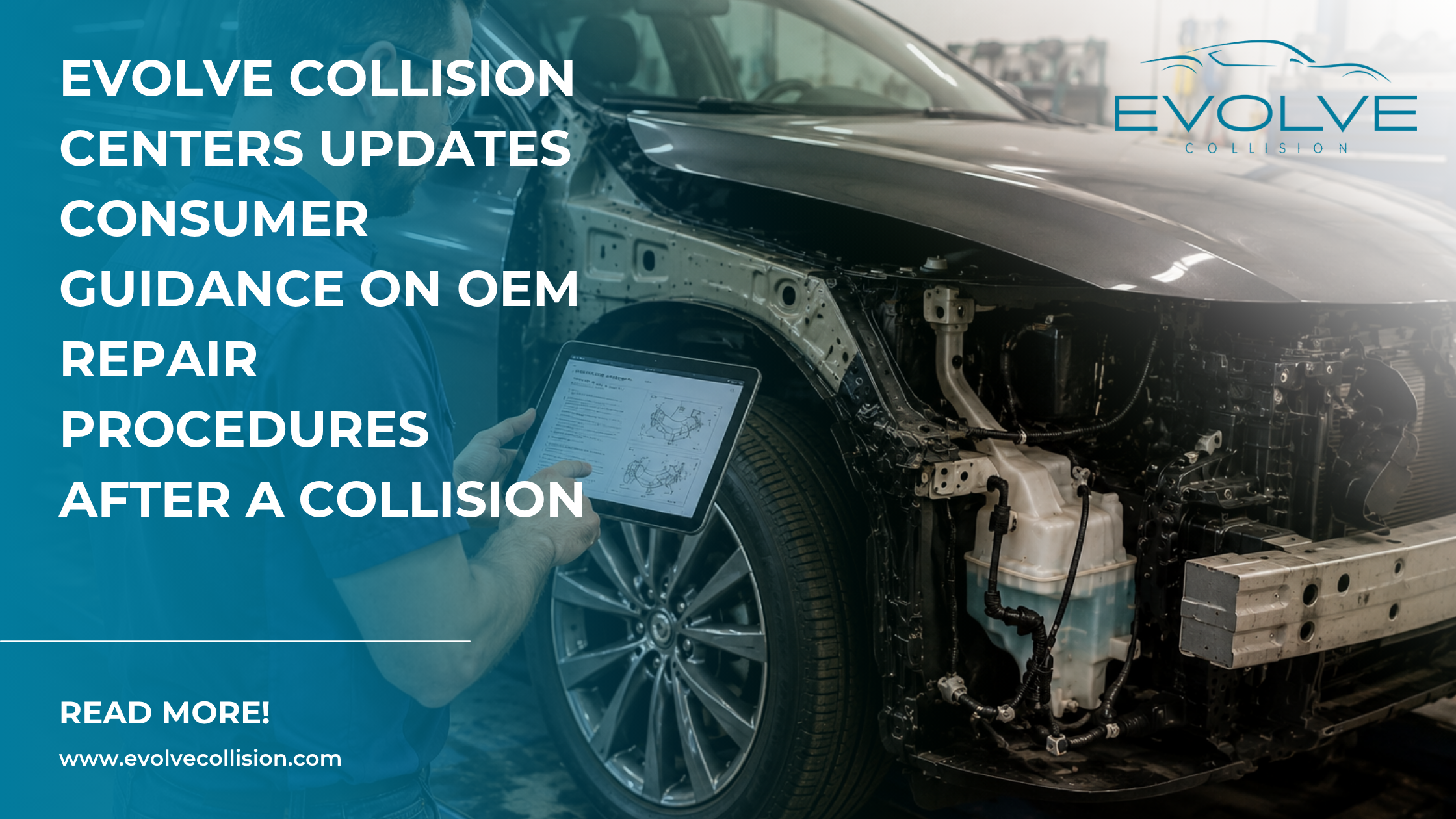
OEM repair procedures are technical instructions and specifications published by vehicle manufacturers for particular models, components, and repair operations. Depending on the vehicle and affected area, this information can provide direction for how specific repair work should be performed.
Evolve Collision Centers' September guidance explains that researching applicable procedures can begin after technicians identify the vehicle and document the collision-affected areas.
Model year, make, model, equipment configuration, affected components, and construction characteristics can all help determine which technical information is relevant to the repair.
This vehicle identification is important because procedures can vary not only between manufacturers but also among models and model years from the same manufacturer.
A repair method applicable to one vehicle therefore should not automatically be assumed appropriate for another vehicle based solely on similar exterior damage.
The first area addressed in the updated guidance is component repairability and replacement.
Following a collision, technicians may need to determine whether an affected component can be repaired or whether replacement is specified or otherwise appropriate based on its documented condition and applicable technical information.
Manufacturer procedures can provide information relevant to that decision.
Depending on the component, OEM information may identify repair limitations, replacement requirements, permitted repair areas, sectioning locations, or other considerations associated with the operation.
The material and construction of the component can also matter. Modern vehicles can incorporate different grades of steel, aluminum, plastics, composites, adhesives, and other materials throughout the body and exterior.
These differences help explain why the apparent size of a dent, deformation, or damaged area does not independently determine the appropriate repair method.
Additional information about Evolve Collision Centers' overall repair process is available through its collision repair resource.
A second area covered by the September guidance is joining and attachment methods.
Replacement of a collision-damaged component can involve more than removing one part and installing another. Vehicle manufacturers can specify how particular components are attached to surrounding areas of the vehicle.
Depending on the design, applicable procedures can involve welds, rivets, adhesives, mechanical fasteners, or combinations of joining methods.
The locations and methods used can also differ according to the component and vehicle.
For consumers, this provides additional context for why apparently similar panel replacements may involve different repair operations. A door, quarter panel, reinforcement, structural component, or other part can have its own attachment requirements.
The guide does not present any single joining technique as appropriate for every repair. Instead, the relevant method is connected to the specific component and applicable manufacturer information.
Measurements and component positioning represent another subject addressed in the publication.
Certain collision repairs can involve dimensions, reference points, alignment considerations, or component positioning identified in manufacturer information.
Which measurements are relevant depends on the affected area and operations being performed.
This is another example of why vehicle-specific information can remain important beyond the initial damage evaluation. Repair planning can require technical details that cannot be determined from exterior appearance alone.
The September guidance also discusses corrosion protection.
Collision repair operations can affect factory-applied coatings, seams, attachment areas, or other protected surfaces. Depending on the repair, manufacturer procedures may contain information addressing corrosion-protection materials or processes associated with the affected area.
The applicable procedures vary according to the vehicle, component, material, and operation.
Evolve Collision Centers' guidance therefore presents corrosion protection as part of the broader repair plan when relevant rather than as one universal procedure applied identically to every vehicle.
Another section of the updated resource focuses on OEM procedures and advanced vehicle technology.
Contemporary vehicles can incorporate cameras, radar units, parking sensors, electronic control systems, and other equipment in or near areas commonly involved in collision repairs.
Bumpers, windshields, mirrors, lamps, and surrounding components can contain or interact with advanced driver-assistance systems.
Repair, removal, replacement, or installation of components in these areas can make vehicle-specific technical information relevant to the repair plan.
Manufacturer procedures may identify circumstances under which diagnostic scanning, calibration, aiming, initialization, or another technical operation applies.
The presence of ADAS equipment alone does not establish that every collision requires calibration or the same diagnostic procedures. Applicable requirements depend on the individual vehicle, affected system, components involved, and work performed.
Evolve Collision Centers provides additional consumer information about these procedures through its scanning and calibration resource.
The September publication also explains why OEM repair procedures can become relevant as a repair plan develops.
An initial exterior inspection provides information about conditions that are visible and accessible at that stage. Appropriate disassembly can later provide access to brackets, reinforcements, mounting points, wiring, fasteners, and other components positioned behind exterior surfaces.
If additional collision-related conditions are documented, technicians can review the manufacturer information relevant to those newly identified areas and update the repair plan when necessary.
This does not mean that every collision produces concealed damage or results in changes to the initial repair information. The guide emphasizes that additional operations should be connected to documented vehicle conditions and applicable procedures rather than assumed from the type of accident.
The relationship between OEM procedures and repair documentation is another focus of the September update.
Repair documentation can connect an identified condition with the operation selected to address it. When manufacturer information applies to that operation, the relevant procedure can provide technical context for the repair plan.
For vehicle owners, this can make terminology encountered during collision repair easier to understand.
References to OEM procedures, sectioning, joining methods, corrosion protection, calibration, repairability, or replacement requirements describe specific considerations that may become relevant according to the vehicle and repair.
The updated guidance also distinguishes OEM certification from OEM repair procedures.
A manufacturer certification program can establish requirements for participating repair facilities, while OEM repair procedures provide technical information associated with particular vehicles and repair operations.
The two concepts are related but are not interchangeable.
Evolve Collision Centers provides information about its manufacturer certification programs through its OEM certification resource.
The September publication focuses specifically on the technical procedures themselves and why vehicle identification and manufacturer research can be relevant regardless of how straightforward collision damage initially appears.
For example, two damaged panels may look similar while being manufactured from different materials or attached using different methods. Likewise, two bumper repairs may involve different electronic equipment or manufacturer requirements even when the visible damage appears comparable.
These differences make vehicle-specific research an important part of understanding what applies to an individual repair.
The guide also explains that OEM procedures should not be interpreted as evidence that every collision repair will be extensive or require specialized electronic operations. Some repairs can involve relatively limited procedures, while others may require additional technical considerations.
The applicable information is determined by the individual vehicle, documented conditions, affected components, and operations being performed.
Evolve Collision Centers' September guidance is intended as consumer education rather than an independent technical repair standard. Its purpose is to explain why manufacturer-specific information can become part of collision repair planning and why procedures can differ among vehicles with similar-looking damage.
By focusing specifically on OEM repair procedures, the September update expands Evolve Collision Centers' consumer information beyond manufacturer certification and provides drivers with additional context about the technical information used during contemporary collision repair.
For drivers in Ardmore and surrounding Main Line communities, Evolve Collision Centers provides collision and auto body repair services from its facility at 2560 Haverford Rd, Ardmore, PA 19003.
About Evolve Collision Centers
Evolve Collision Centers provides collision and related automotive repair services, including auto body repair, paintless dent repair, refinishing, auto glass work, vehicle scanning and calibration, and OEM-certified repair capabilities. The company serves vehicle owners in Ardmore and surrounding Main Line communities.
###
For more information about Evolve Collision Centers, contact the company here:
Evolve Collision Centers
Butch Cantz
(267) 692-6699
bcantz@evolvecollision.com
2560 Haverford Rd, Ardmore, PA 19003
Evolve Collision Center in Ardmore provides expert collision repair and auto body services using advanced technology and skilled craftsmanship. From dent repair to full restoration, we deliver quality repairs and exceptional customer care.
Butch Cantz
2560 Haverford Rd, Ardmore, PA 19003
(267) 692-6699
bcantz@evolvecollision.com
Visit Website