October 28, 2026
Ardmore, PA - October 28, 2026 -
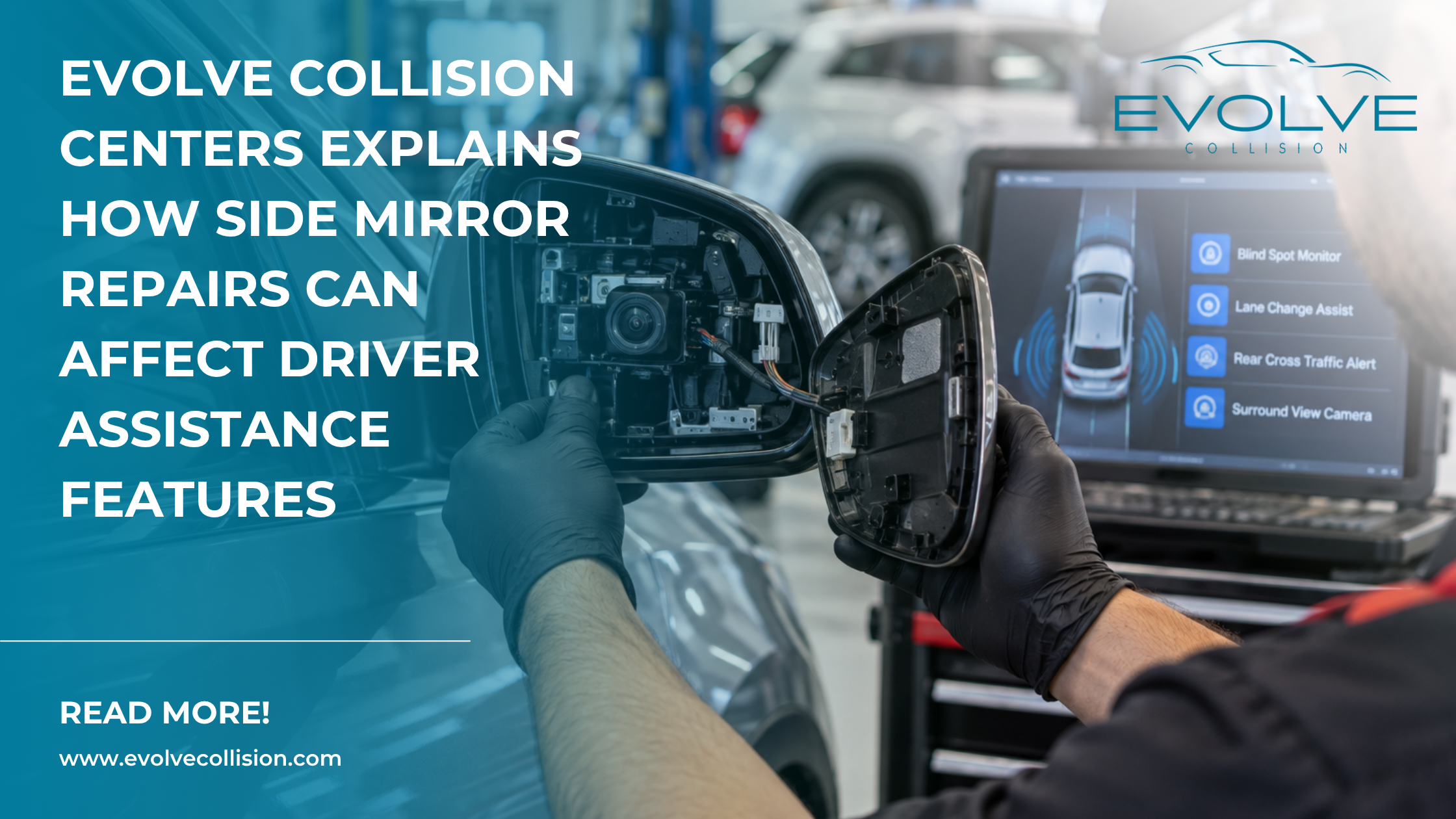
Evolve Collision Centers is publishing consumer guidance explaining why repairing a modern side mirror after a collision can involve more than replacing broken glass or an exterior housing. The October resource focuses on how cameras, warning indicators, wiring, powered functions, and other technology incorporated into some mirror assemblies can affect the repair process.
Side mirrors have evolved into increasingly complex vehicle components. Depending on the vehicle and installed equipment, a mirror assembly may include blind spot warning indicators, side-view or surround-view cameras, turn signals, heating elements, power-folding mechanisms, memory functions, and other electrical features.
The new guidance gives consumers a practical way to understand the repair process: identify what equipment is installed, determine what was damaged, repair the physical components, and then complete any diagnostic or calibration procedures specified for the affected technology.
Evolve Collision Centers provides collision repair for vehicles with physical and technology-related damage after an accident.
A side mirror impact can have several different outcomes. Minor contact may damage only the reflective glass or exterior cover. A stronger impact can affect the housing, mounting base, adjustment mechanism, wiring, camera, indicator, or surrounding door area. The mirror can also be moved from its normal position without every internal component showing visible damage.
Vehicle identification becomes particularly important because visually similar mirrors may contain different equipment. Model year, trim level, options, and installed driver-assistance technology can change the configuration of the mirror. Selecting a replacement therefore involves matching the equipment installed on the vehicle, not simply finding a component with the same exterior shape.
Blind spot monitoring illustrates this distinction. On some vehicles, the mirror contains the warning indicator while the component detecting nearby traffic is located elsewhere on the vehicle. Damage to the mirror could therefore affect the indicator or its electrical connection without directly damaging the sensing component. Conversely, replacing the mirror would not address separate collision damage to a radar unit located elsewhere.
Cameras create another consideration. Some vehicles incorporate side-view or surround-view cameras into their mirror assemblies. If an impact damages or changes the position of a camera-equipped mirror, additional electronic procedures may apply after the physical repair.
Calibration, when specified for the affected system, establishes required references for applicable cameras, sensors, or related driver-assistance components. A side-mirror camera should not automatically be treated like a forward-facing windshield camera because calibration procedures, equipment, targets, and setup requirements can differ among systems and vehicles.
Evolve Collision Centers provides scanning and calibration services when these procedures apply as part of a repair.
Diagnostic scanning serves a different purpose. A scan communicates with electronic modules and can provide information about diagnostic trouble codes and system status. If an impact damages wiring, disconnects an electronic mirror assembly, or affects related technology, diagnostic information can provide additional context. Scanning does not perform the same function as calibration, so the two operations should not be considered interchangeable.
Physical mounting also matters. A side mirror attaches to the door or surrounding structure at a defined location. An impact strong enough to damage the assembly can also affect its mounting area or nearby body panels. Installing a replacement mirror without addressing damage to the attachment area would leave a separate physical repair unresolved.
Evolve Collision Centers’ auto body repair services address surrounding exterior damage when a side impact affects both the mirror and door.
The October guidance also cautions against assuming that every damaged powered mirror requires ADAS calibration. Heating, power adjustment, folding mechanisms, memory functions, and turn signals can add electrical complexity without necessarily being driver-assistance components. The repair plan should reflect the equipment actually installed and the work performed.
This distinction is especially important with camera-equipped mirrors. Surround-view systems can combine images from cameras positioned at several locations around a vehicle. When a mirror-mounted camera is replaced or repositioned, the applicable procedure may include calibration, initialization, or another specified step to address that particular system.
Replacement parts can add another layer to the repair. An entire mirror assembly may need to match electrical connectors, cameras, indicators, heating elements, folding functions, memory equipment, and other installed features. Exterior appearance alone may not identify the correct configuration.
For drivers reviewing an estimate, several entries associated with one damaged mirror do not necessarily represent duplicate work. Mirror removal or replacement addresses the assembly itself. Body work addresses damage to the door or mounting area. Refinishing addresses affected painted surfaces. Diagnostic scanning communicates with applicable electronic modules. Calibration addresses specified references for relevant driver-assistance components when required.
The October resource brings those operations into a simpler consumer framework. A modern side mirror should first be evaluated according to the vehicle’s actual equipment and collision damage. Physical repairs can then be completed, followed by applicable electronic procedures associated with the repaired components.
The main takeaway is that side mirror repair can range from a relatively straightforward exterior repair to work involving cameras, wiring, powered functions, or driver-assistance technology. The scope is determined by what the vehicle contains and what the collision affected, rather than by the apparent size of the mirror damage alone.
Evolve Collision Centers is located at 2560 Haverford Rd, Ardmore, PA 19003, United States and provides collision repair, auto body repair, scanning, calibration, and related vehicle repair services.
###
For more information about Evolve Collision Centers, contact the company here:
Evolve Collision Centers
Butch Cantz
(267) 692-6699
bcantz@evolvecollision.com
2560 Haverford Rd, Ardmore, PA 19003

Evolve Collision Center in Ardmore provides expert collision repair and auto body services using advanced technology and skilled craftsmanship. From dent repair to full restoration, we deliver quality repairs and exceptional customer care.
Butch Cantz
2560 Haverford Rd, Ardmore, PA 19003
(267) 692-6699
bcantz@evolvecollision.com
Visit Website