November 04, 2026
Ardmore, PA - November 04, 2026 -
Evolve Collision Centers is providing November consumer guidance on the role of Advanced Driver Assistance Systems (ADAS) calibration in modern collision repair. The information explains how vehicle cameras, radar sensors, and related electronic systems can be affected by accident damage and why manufacturer-required calibration procedures may be necessary before certain repairs are considered complete.
Modern vehicles increasingly incorporate driver-assistance technologies designed to support vehicle operation and driver awareness. These systems may include automatic emergency braking, adaptive cruise control, lane departure warning, and blind spot monitoring. Their operation can depend on the positioning and condition of cameras, radar sensors, and associated components.
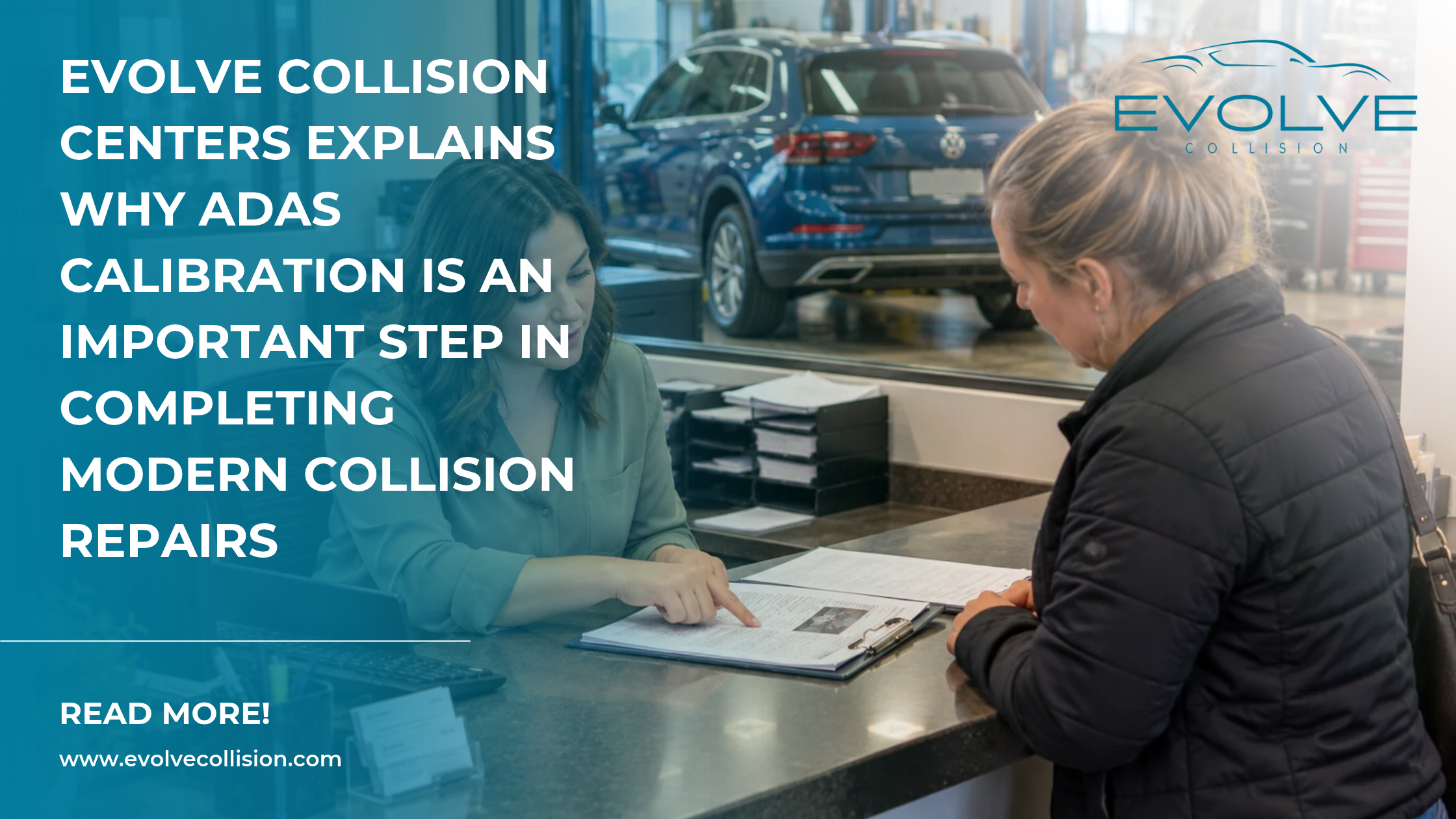
The November guidance focuses on three considerations: identifying collision-related conditions that may affect ADAS equipment, determining when manufacturer procedures require calibration, and verifying the completion of applicable electronic repairs. These considerations help explain why restoring a vehicle's exterior appearance may not address every system affected by an accident.
The first consideration involves evaluating damage near ADAS components. Cameras and radar sensors may be positioned behind bumpers, near windshields, within exterior mirrors, or in other locations exposed to collision forces. Damage affecting these areas can influence sensor mounting positions, electrical connections, or surrounding components.
For example, a front-end collision may affect a radar sensor bracket even when the sensor itself shows no obvious exterior damage. A windshield replacement may also involve a camera mounting area that requires evaluation under the vehicle manufacturer's instructions. The appropriate procedures depend on the vehicle's design and the repairs performed.
Evolve Collision Centers provides information about electronic system evaluation through its scanning and calibration services. These procedures address different aspects of vehicle electronics and may form part of a broader collision repair plan when required by the manufacturer.
The second consideration involves understanding the distinction between diagnostic scanning and ADAS calibration. Diagnostic scanning communicates with vehicle electronic systems to retrieve certain fault information and identify conditions requiring additional investigation. Calibration follows manufacturer-defined procedures to establish or verify the operating parameters of applicable cameras and sensors.
A diagnostic scan does not automatically establish that an ADAS component is correctly positioned or calibrated. Similarly, completing calibration does not replace the need to investigate physical damage or other electronic faults. The required operations depend on the affected systems and applicable manufacturer instructions.
ADAS calibration procedures can differ considerably between vehicle manufacturers and models. Some vehicles require static calibration using specified targets, equipment, and positioning conditions. Others may require dynamic calibration involving a prescribed driving procedure, while certain systems require a combination of both methods.
Static calibration procedures may specify target distances, vehicle positioning, floor conditions, and other setup requirements. Dynamic calibration procedures may establish requirements involving road conditions, vehicle speed, lane markings, or driving duration. These details are determined by the vehicle manufacturer's instructions rather than a universal calibration method.
The third consideration involves integrating ADAS requirements into the overall collision repair process. Repairs affecting bumper structures, sensor mounting locations, suspension geometry, or windshield-mounted cameras may trigger additional electronic procedures depending on the vehicle. These requirements can influence repair planning, scheduling, and final verification.
Evolve Collision Centers provides information about accident-related restoration through its collision repair services. Collision damage assessments may identify both visible body damage and conditions affecting electronic equipment, with the required repair operations determined by vehicle-specific procedures.
The guidance also addresses the relationship between structural or mechanical repairs and electronic calibration. Changes to vehicle alignment, ride height, or sensor mounting geometry may affect the conditions under which certain driver-assistance systems operate. Manufacturer instructions determine whether additional inspection or calibration is required after the relevant repairs.
Initial collision repair estimates may not identify every electronic procedure needed to complete the work. During disassembly or further inspection, technicians may discover affected sensors, mounting brackets, wiring, or other components requiring additional attention. These findings can result in revised repair plans and supplemental documentation.
Post-repair verification represents another part of the process. Depending on the vehicle, applicable checks may include diagnostic scans, confirmation of completed calibration procedures, inspection of sensor mounting locations, or review of relevant electronic fault information. These operations help document whether manufacturer-required electronic procedures have been completed.
The absence of a dashboard warning light does not necessarily establish that all required ADAS evaluations have been performed. Some manufacturer procedures specify calibration or inspection based on the repairs completed rather than the presence of a visible warning. Vehicle-specific repair information remains necessary when determining the applicable requirements.
Not every collision requires ADAS calibration. The need for calibration depends on the vehicle's equipment, the location and severity of damage, the components affected, and the repair procedures performed. A preliminary inspection and the applicable manufacturer instructions help establish the appropriate scope of work.
Evolve Collision Centers' November guidance explains that ADAS calibration is a distinct technical operation within the broader collision repair process. When required, it forms part of completing the applicable vehicle-specific repair procedures rather than an optional exterior finishing step.
Information about the company's manufacturer-focused repair qualifications is available through Evolve Collision Centers' OEM certification information. Manufacturer certifications and repair requirements can vary by vehicle brand and facility, making the applicable qualifications relevant to individual repair circumstances.
About Evolve Collision Centers
Evolve Collision Centers provides collision repair, auto body repair, paint refinishing, glass services, paintless dent repair, and vehicle scanning and calibration services. The company serves drivers in Ardmore and surrounding Pennsylvania communities, with repair procedures determined by the damage identified and applicable vehicle manufacturer requirements.
###
For more information about Evolve Collision Centers, contact the company here:
Evolve Collision Centers
Butch Cantz
(267) 692-6699
bcantz@evolvecollision.com
2560 Haverford Rd, Ardmore, PA 19003
Evolve Collision Center in Ardmore provides expert collision repair and auto body services using advanced technology and skilled craftsmanship. From dent repair to full restoration, we deliver quality repairs and exceptional customer care.
Butch Cantz
2560 Haverford Rd, Ardmore, PA 19003
(267) 692-6699
bcantz@evolvecollision.com
Visit Website